Stockmarket Terms: Dead Cat Bounce

What is a “Dead Cat Bounce”?
- A short-lived recovery in price
- During an overall strong downward trend
In simple terms:
- The stock has been falling hard
- It suddenly bounces up (looks promising)
- Then resumes falling again
Example
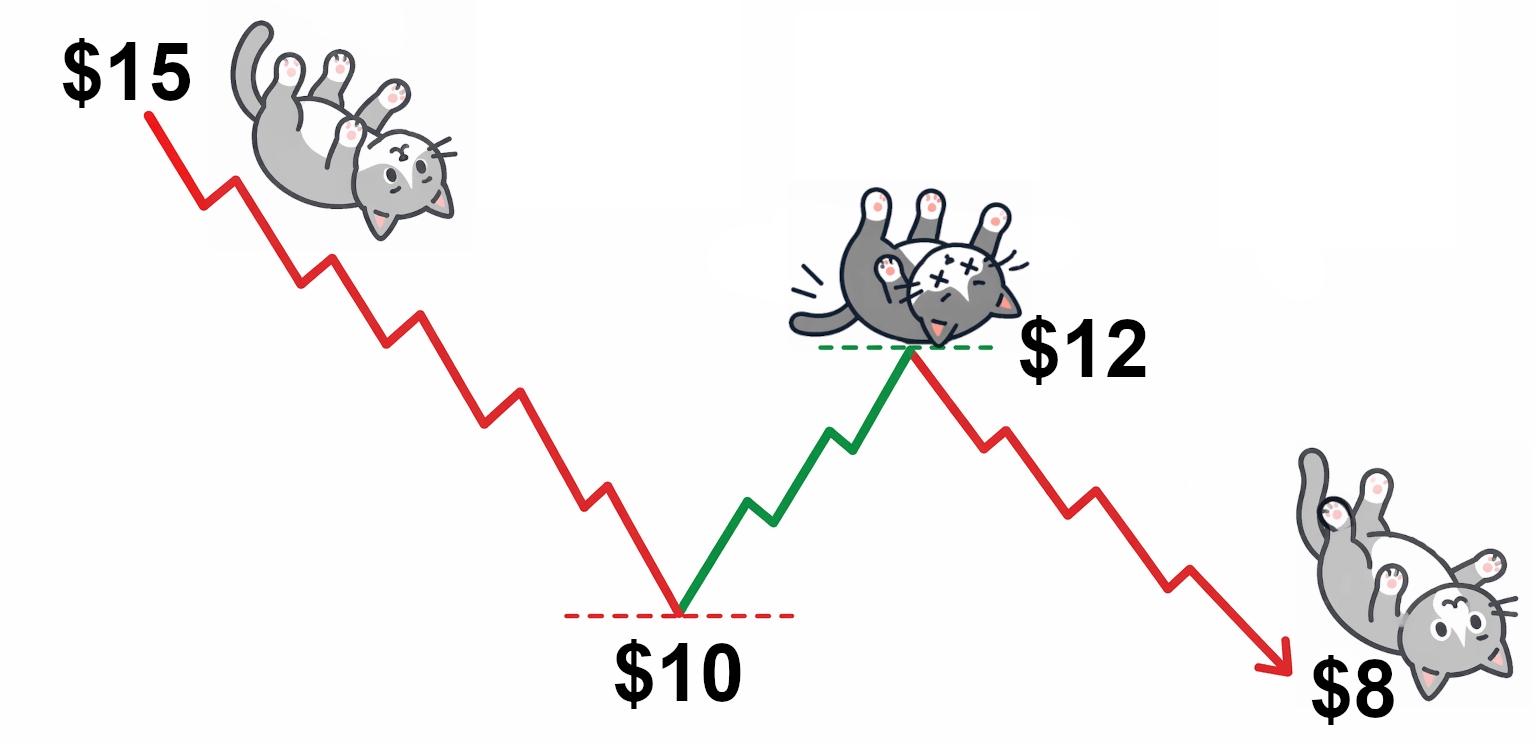
- Stock drops from $15 → $10
- Bounces to $12
- Then falls to $8
That move from $10 → $12 is the dead cat bounce

Where did these term come from?
The phrase comes from an old market saying: “Even a dead cat will bounce if it falls from a great height.”
When did it start being used?
The term dates back to the 1980s financial markets, widely believed to have been popularised in the London and Hong Kong trading desks.
What’s happening?
A dead cat bounce isn’t random it usually comes from:
- Short covering
After a big drop:
- Short sellers take profits
- They buy back shares, this creates upward pressure
- Value hunters stepping in
Investors think: “This looks cheap now” They buy. But the broader trend hasn’t changed, and the fundamentals are still weak

- Technical rebound
Markets rarely move in straight lines:
- Oversold conditions
- Algorithmic trading triggers
- Cause temporary bounces
- False hope / sentiment shift
This is the dangerous bit:
People think: “This is the bottom” But it isn’t.
The balanced takeaway
“A bounce doesn’t mean a turnaround.”
For investors:
- Wait for confirmation, not hope
- Understand the trend, not just the move
- Manage risk, especially in falling markets

Stockmarket Terms
Here is a collection of stock market terms, some you may already be familiar with, and others you may not have encountered before. Discover what they mean, explore their origins, and understand how they apply to what is happening in the market today.










What is the term "black swan"?




What you learn here has been used in our Trade for Good software.
Click on the button to find our software education videos.
You can read more of our educational articles in the Trade for Good Learn section
Trade for Good Learn