Who does what when a trade occurs
When you fill a buy or sell trade, who does what? And why?
This continues our trade, of a Buy order to BUY 100 Commonwealth Bank (CBA.ASX) shares.
WHO DOES WHAT: ROLE BREAKDOWN
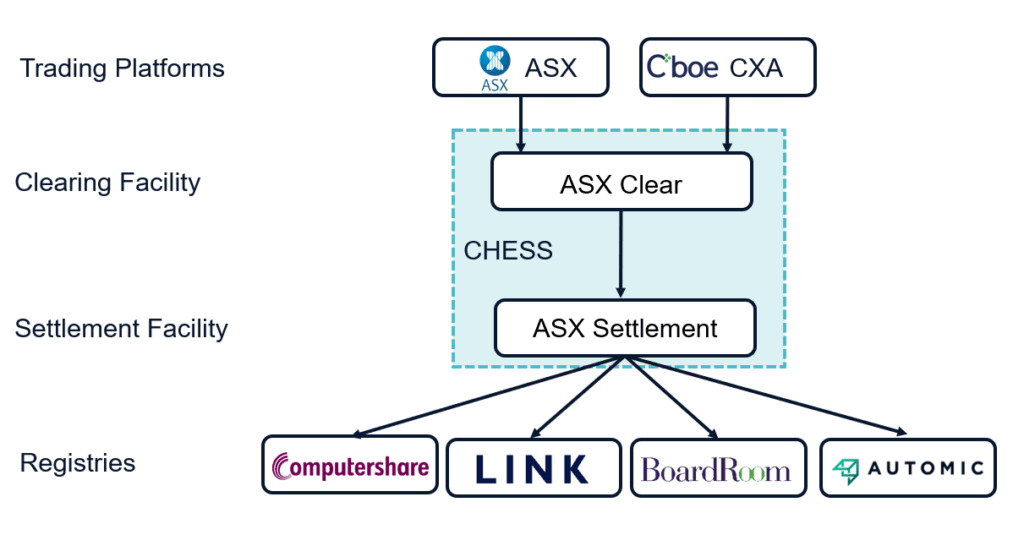
The roles are broken down into 4 groups;
- The Broker
- The Clearer
- Settlement or CHESS
- And Registries
1. THE BROKER (Trade for Good)
Role: Your agent and intermediary in the market, they facilitate the creation of the trades.
Responsibilities:
✅ Provides Trading Platform – Software or web interface for placing orders
✅ Takes your order – Receives and processes your trading instructions
✅ Validates you have funds/shares – Pre-trade risk management
✅ Routes order to exchange – Transmits orders to ASX electronically
✅ Customer service and support – Helps with questions, issues, and technical problems
✅ Provides market data – Real-time or delayed price information
✅ Offers research and tools – Charts, analysis, and educational resources
✅ Manages your trading account – Maintains account records and balances
✅ Handles disputes – Resolves trade errors or system issues

2. THE CLEARER (AUSIEX)
Role: The market participant who handles the clearing process; they make sure the broker has access to make trades.
Responsibilities:
✅ Validates you have funds/shares – Secondary verification layer
✅ Routes order to exchange – On behalf of the broker, if needed
✅ Holds your money in a trust account – Segregated client funds protected by regulation
✅ Manages your CHESS sponsorship – Administers your HIN (Holder Identification Number)
✅ Sends confirmations – Contract notes and settlement notices
✅ Collects/pays money on T+2 – Coordinates the cash leg of settlement
✅ Provides tax reporting – Annual tax statements and CGT calculations
✅ Manages corporate actions – Dividends, rights issues, takeovers
✅ Handles settlement fails – Resolves issues when trades don’t settle properly

2. SETTLEMENT OR CHESS
What is CHESS?
CHESS is the computer system used by the ASX to manage the settlement of share transactions and to record shareholdings. Both the ASX Clear and Settlement sit inside CHESS.

THE CLEARING HOUSE (ASX Clear)
Role: Central counterparty (CCP) and risk manager – the financial intermediary that guarantees trades
Responsibilities:
✅ Becomes a buyer to every seller – Interposes itself between trading parties
✅ Becomes a seller to every buyer – Takes the opposite side of every trade
✅ Eliminates counterparty risk – You don’t need to worry about the other party defaulting
✅ Nets positions – Combines multiple trades to reduce settlement obligations
✅ Calculates settlement obligations – Determines who owes what to whom
✅ Manages participant collateral – Requires brokers to post margin as security
✅ Guarantees trade completion – Ensures settlement even if a participant fails
✅ Default management – Has procedures and resources to handle participant defaults
✅ Stress testing – Regularly tests its ability to handle market disruptions
✅ Maintains default fund – Pool of resources contributed by participants
THE SETTLEMENT SYSTEM (ASX Settlement)
Role: Electronic share registry and ownership transfer system
Full name: Clearing House Electronic Subregister System (CHESS)
Responsibilities:
- ✅ Maintains electronic share register – Database of who owns which shares
- ✅ Issues HINs (Holder Identification Numbers) – Unique 10-digit identifier for each investor (format: X0001234567)
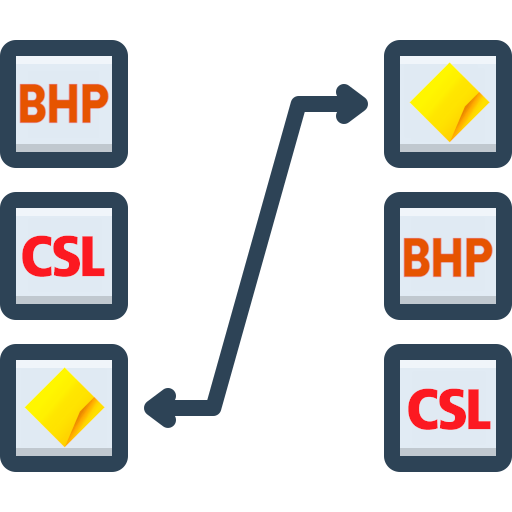
- ✅ Transfers share ownership – Updates ownership records on settlement day
- ✅ Coordinates Delivery vs Payment (DvP) – Ensures shares and money exchange simultaneously
- ✅ Updates company registers – Notifies share registries of ownership changes
- ✅ Facilitates corporate actions – Manages dividends, splits, rights issues
- ✅ Processes off-market transfers – Handles share transfers outside normal trading
- ✅ Provides portfolio reporting – Generates holding statements
- ✅ Manages takeover processes – Facilitates acceptances and compulsory acquisitions
- ✅ Links with tax authorities – Provides information for tax reporting purposes

What is the difference between CHESS and Custodial?
CHESS Sponsorship?
- Your broker “sponsors” your HIN, acting as your administrator
- Your name appears on the register (not the broker’s name)
- You own shares directly as the legal owner
Custodian Model
- Some brokers hold shares on your behalf in their name
- Broker’s name appears on the register (not yours)
- You have beneficial ownership (economic rights) but not legal ownership
- More common for international shares
4. THE SHARE REGISTRY (e.g., Computershare, Link Market Services, Automic)
Role: Company’s appointed recordkeeper and shareholder administrator
Responsibilities:
✅ Maintains company’s shareholder register – Official list of all shareholders
✅ Sends dividend payments – Processes and distributes dividends to bank accounts
✅ Distributes company announcements – Mails annual reports and important notices
✅ Processes dividend reinvestment plans (DRPs) – Allows reinvesting dividends into more shares
✅ Issues annual reports – Sends financial statements and company updates
✅ Manages voting for AGMs – Facilitates proxy voting and attendance registration
✅ Manages takeover offers – Processes acceptances and payments
✅ Provides online portal access – Allows shareholders to view holdings and update details

Stockmarket Knowledge
This is one of the Stockmarket Knowledge Education articles, which delve into the processes and roles involved in online share trading on the ASX. It will show you who does what, why, when, and how monies are taken or paid during settlement.
Click on the subjects below to open the educational content.
The Bottom Line
The Australian share trading system involves multiple specialized participants working together to ensure every trade is executed fairly, settled securely, and recorded accurately.
As an investor, you primarily interact with your broker, but behind the scenes, the exchange matches your orders, ASX Clear guarantees completion, CHESS transfers ownership to your name, and share registries manage your ongoing shareholder rights. This division of responsibilities is a deliberate design that protects you from counterparty risk, ensures you legally own your shares, and provides transparency throughout the process.
What you learn here has been used in our Trade for Good software.
Click on the button to find our software education videos.
You can read more of our educational articles in the Trade for Good Learn section
Trade for Good Learn