How to Analyse Stocks Like Peter Lynch

How Peter Lynch Analyzed Stocks (And How You Can Too)
Peter Lynch is widely regarded as one of the greatest fund managers of all time. As the manager of Fidelity’s Magellan Fund from 1977 to 1990, Lynch delivered annualised returns of around 29%, significantly outperforming the market over more than a decade.
What made Lynch exceptional was not complex financial modelling or macroeconomic forecasting. His edge came from a disciplined, common-sense framework focused on understanding businesses, tracking earnings growth, and buying companies at sensible prices.
Why Peter Lynch’s Framework Is So Powerful
Lynch’s approach is built on a few simple but rigorous principles:
- Invest in what you understand
- Focus on earnings, not stories
- Classify companies before valuing them
- Match valuation to growth (PEG ratio)
- Avoid excessive debt and complexity
Rather than trying to predict interest rates, recessions, or market sentiment, Lynch concentrated on what could be known: how a business makes money, whether it is growing, and whether the price being paid is reasonable.
This discipline makes his framework highly repeatable—and timeless.
Here’s his framework, simplified 👇
Invest in What You Know
Lynch believed the best stock ideas often come from everyday life.
Ask:
- What products do people love?
- What companies are everywhere?
- What businesses are quietly expanding?
ASX example:
CSL, Goodman Group, WiseTech, Pro Medicus
💡 Insight:
Retail investors often see trends before analysts. But Lynch warned: “A good story is not enough. Fundamentals must confirm it.”

Classify the Stock
Lynch always asked: What type of company is this?
| CATEGORY | DESCRIPTION | TYPICAL TRAITS |
| Slow Growers | Mature companies | GDP-like growth, high dividends |
| Stalwarts | Blue chips | 8–12% growth |
| Fast Growers | High-growth companies | 15–40% growth |
| Cyclicals | Boom/bust industries | Mining, autos, banks |
| Turnarounds | Recovering companies | Distressed but improving |
| Asset Plays | Hidden assets | Property, cash, undervalued assets |
🎯 Each category has different valuation rules.
| CSL | Stalwart/Fast grower | BHP | Cyclical |
| QANTAS | Cyclical/Turnaround | Pro Medicus | Fast grower |
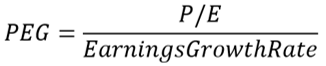
Lynch Favorite Metric: PEG Ratio
Lynch’s favorite valuation tool:
Interpretation:
- PEG < 1 = Undervalued growth
- PEG ≈ 1 = Fair value
- PEG > 2 = Expensive
Example:
- P/E = 20
- Growth = 20%
- PEG = 1 → attractive
💡 Lynch preferred companies where: Earnings growth ≥ P/E ratio, this is basically your GARP framework.
Focus on Earnings, Not Stories
Lynch obsessed over one thing: earnings power.
Key questions:
- Are earnings growing consistently?
- Is growth accelerating or slowing?
- Is growth organic or acquisition-driven?
Ideal pattern:
- 5–10 years of steady EPS growth
- No wild volatility
- Upward trend in margins
🚩 Red flags:
- Flat earnings with rising share price
- One-off profits
- Aggressive accounting

Avoid the “Diworsification” Trap
Lynch hated overly diversified businesses.
Lynch preferred companies with:
- Simple business models
- Clear revenue drivers
- Focused strategy
Example:
- Pro Medicus: medical imaging software
- WiseTech: logistics software
Not:
- Conglomerates with unrelated divisions

Balance Sheet Discipline (Underrated but Critical)
Lynch was not reckless about debt.
He checked:
- Debt-to-equity
- Interest coverage ratio
- Free cash flow
- Inventory levels
Lynch rule of thumb:
- Debt should be manageable relative to cash flow.
- Fast growers should NOT be debt-loaded.
🚩 Red flags:
- Rising debt + falling margins
- Inventory growing faster than sales

Competitive Advantage (“Moat” Before Buffett Made It Popular)
Lynch asked: “Why can’t competitors destroy this business?”
Look for:
- Brand power (Apple)
- Switching costs (WiseTech)
- Network effects (ASX, Visa)
- Regulatory barriers (banks, healthcare)
- Intellectual property (CSL)

Insider Behaviour
Lynch watched insiders closely.
Positive signal:
- Directors buying shares with their own money
Negative signal:
- Heavy insider selling
- Equity raisings without growth
He famously said: “Insiders might sell for many reasons, but they buy for only one.”

Institutional Ownership: Not Too High, Not Too Low
Lynch liked stocks that institutions had NOT fully discovered yet.
Why?
- If everyone already owns it → limited upside.
- If no one owns it → may be junk.
🎯 Sweet spot:
- Growing institutional ownership over time.

The “10-Bagger” Mindset
Lynch searched for stocks that could grow 10x.
Traits of potential 10-baggers:
- Small to mid-cap
- Large addressable market
- Strong earnings growth
- Scalable business model
- Founder-led or visionary management
Example:
- Amazon (early days)
- Nvidia (pre-AI boom)
- Pro Medicus (ASX)

Lynch’s Practical Stock Checklist (Fund Manager Version)
If you want, I can turn this into a professional template for you, but here’s the core logic:
✅ Business Quality
- Simple business model?
- Clear growth drivers?
- Competitive moat?
✅ Financials
- Revenue growth > 10%?
- EPS growth consistent?
- Margins stable or rising?
- Strong free cash flow?
✅ Valuation
- PEG ≤ 1.5?
- P/E vs growth reasonable?
- Not priced for perfection?
✅ Balance Sheet
- Low/moderate debt?
- Healthy working capital?
✅ Market Position
- Market share increasing?
- Industry tailwinds?
✅ Behavioural Signals
- Insider buying?
- Institutional ownership rising?
- Product adoption visible?
If 80% of answers are “yes” → Lynch would be interested.
How Lynch’s Framework Benefits ASX Investors
Applying a Peter Lynch–style approach can help investors:
- Improve decision-making by focusing on business fundamentals
- Avoid emotional investing and market noise
- Identify quality growth companies before they become crowded trades
- Better assess valuation using growth-adjusted metrics (like PEG)
- Reduce downside risk by paying attention to balance sheets and cash flow
- Build conviction to hold quality companies through volatility
Perhaps most importantly, Lynch’s framework empowers individual investors. It recognises that everyday observations—when combined with disciplined analysis—can be a genuine edge, even in professional markets.

The Big Takeaway
Peter Lynch showed that successful investing doesn’t require predicting the future or outsmarting the market. It requires clarity, discipline, and patience.
For ASX investors navigating a market shaped by dividends, cyclicality, and a small number of dominant sectors, Lynch’s framework remains one of the most practical and effective ways to analyse stocks—and to invest with confidence over the long term.
What you learn here has been used in our Trade for Good software.
Click on the button to find our software education videos.
You can read more of our educational articles in the Trade for Good Learn section
Trade for Good Learn