The Oil Price Shock of 2008:
How One Commodity Rattled the Global Economy
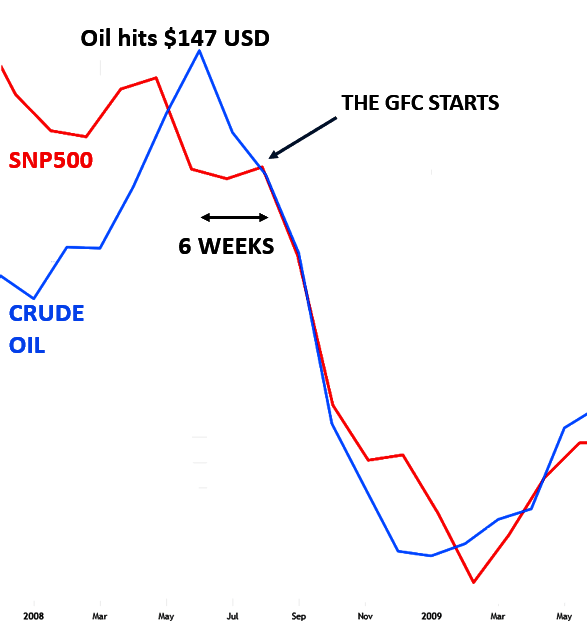
When crude oil hit $147 per barrel in July 2008, it wasn’t just an energy story—it was a full-scale economic shock. Oil isn’t just fuel; it’s a raw material, transport enabler, and energy source. That means when prices spike, the impact spreads across the entire economy at once.

The Build-Up: Why Oil Went So High
The move to $147 wasn’t random—it was the result of several powerful forces aligning. Reaching $147 USD, was the catalyst for the slow down, which put pressure on the market so reliant on oil.
It affected these areas.
1. Global Demand Boom
The mid-2000s saw rapid industrialisation, particularly in China and emerging markets. Oil consumption surged as infrastructure, manufacturing and transport expanded at scale.
2. Supply Constraints Narrative
There was growing concern around “peak oil” the idea that global supply couldn’t keep up with demand. Even small disruptions or geopolitical tensions (Middle East, Russia) added fuel to this fear.
3. Weak US Dollar
Oil is priced in USD. As the dollar weakened, commodities became more attractive globally, pushing prices higher.
4. Financialisation of Commodities
Institutional capital flowed heavily into commodities as an asset class. Oil wasn’t just a resource anymore it became an investment trade, amplifying price movements.
The Turning Point: From Boom to Breakdown
By mid-2008, sentiment was overwhelmingly bullish. Some analysts were calling for $200 oil.
Then everything changed.
The Global Financial Crisis (GFC) hit.
- Credit markets froze
- Economic activity slowed sharply
- Demand for oil dropped across transport, manufacturing and industry
What had been a supply-driven narrative quickly flipped into demand destruction.
The Collapse: Speed Matters
The reversal was brutal:
- July 2008: ~$147 per barrel
- December 2008: ~$30–$40 per barrel
That’s a decline of more than 70% in under six months.
This wasn’t a slow correction it was a liquidity-driven unwind:
- Hedge funds and institutions exited positions
- Margin calls forced selling
- Speculative capital disappeared as quickly as it arrived
⛽ 1. Transport: The First Domino
The most visible impact was immediate and universal. Petrol prices surged across every major economy in the United States, average pump prices crossed $4 per gallon for the first time in history, a psychological and financial milestone. In Europe and Asia, where fuel taxes already made petrol expensive, the spike pushed prices to levels that genuinely altered behaviour.
- Airlines saw fuel costs jump to ~40% of expenses
- Routes were cut, planes grounded, and carriers collapsed
- Shipping and trucking costs surged
Every product became more expensive to move. Global supply chains built on cheap energy started to strain.
🛒 2. Food Prices: The Hidden Shock
The connection between oil and food prices is one of the most underappreciated relationships in macroeconomics, and 2008 made it impossible to ignore.
The mechanisms are multiple and reinforcing:
- Fertiliser (linked to gas) surged in cost
- Diesel-powered farming became more expensive
- Biofuel demand diverted crops like corn
- Transport costs pushed food prices higher
The cumulative result was a global food price crisis that peaked in 2007–2008. The FAO Food Price Index hit record levels. Wheat prices doubled. Rice prices tripled at certain points in Asian spot markets, triggering panic buying and export bans from major producing nations including Vietnam and India.
🏗️ 3. Construction & Materials
Petroleum is not only burned it is transformed. A significant portion of every barrel of crude oil ends up as something solid rather than something combusted, and this means that construction and manufacturing face oil price exposure that has nothing to do with their energy bills.
- Asphalt (roads) is petroleum-based
- Plastics underpin packaging, infrastructure, and goods
- Steel and cement rely on energy-intensive production
The result in 2008 was that infrastructure costs increased substantially at precisely the moment when many governments were already experiencing fiscal stress from the emerging financial crisis. Planned projects were deferred, contracted projects saw budget overruns, and the pipeline of new construction activity began to slow.

🏭 4. Manufacturing: Margin Pressure
For manufacturers, oil price shocks are particularly insidious because they attack from multiple directions simultaneously.
- Higher energy costs
- More expensive raw materials
- Rising transport and packaging costs
This created cost-push inflation, squeezing margins. Companies cut investment, hiring, and spending accelerating the economic slowdown.
🛍️ 5. Households: Cost of Living Spike
For ordinary households, the 2008 oil shock was experienced as a relentless, broad-based increase in the cost of living. It wasn’t just petrol it was everything.
- Fuel, food, and utilities rose
- Clothing and goods (often oil-based) increased in price
- Discretionary spending fell
For ordinary households, the 2008 oil shock was experienced as a relentless, broad-based increase in the cost of living. It wasn’t just petrol it was everything.

📈 6. Inflation & Policy Pressure
All of the above fed into headline consumer price inflation globally. By mid-2008, inflation had risen significantly across most major economies in the UK it reached 5%, well above the Bank of England’s 2% target; in the eurozone it touched 4%; in many emerging markets it was considerably higher.
- Raise rates → risk worsening the slowdown
- Cut rates → risk fuelling inflation
This created a classic stagflation dilemma just as the financial system was beginning to crack.

⚖️ The Core Insight
This is the most elegant and important insight about extreme oil price shocks: they contain the seeds of their own reversal.
Higher oil → higher costs → weaker demand → economic slowdown → lower oil demand → price collapse
That’s exactly what happened:
- $147 (July 2008) → ~$35 (Dec 2008)

🧭 The 2022–2024 Parallel
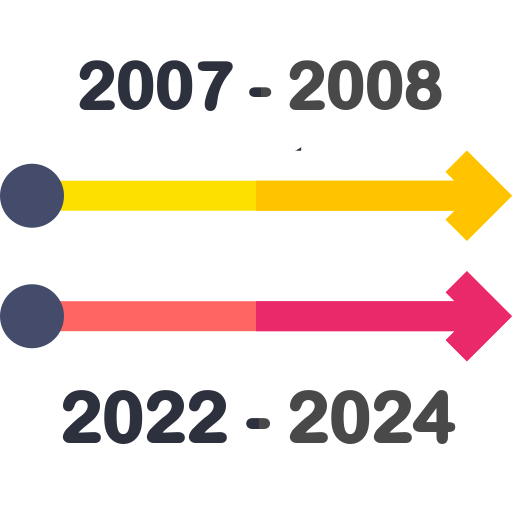
The 2007–2008 energy shock did not happen in isolation and has not been the last of its kind. The 2022 energy crisis triggered by Russia’s invasion of Ukraine followed an almost identical playbook: supply disruption drove energy prices sharply higher, food prices surged because Ukraine and Russia together account for a significant share of global wheat and fertiliser exports, transport costs rose, inflation spiked globally, and central banks were forced into aggressive tightening cycles despite weakening growth.
The Bottom Line
Oil isn’t just another commodity it’s embedded in everything when oil goes up:
- Transport gets expensive
- Production gets expensive
- Living gets expensive
When it moves sharply, it doesn’t just affect one sector it reshapes the entire economic system.
When oil goes up:
- Transport gets expensive
- Production gets expensive
- Living gets expensiveAnd eventually:
- Demand drops
- Growth slows
- Prices correct
And that’s why oil remains the most economically important commodity in the world.
What you learn here has been used in our Trade for Good software.
Click on the button to find our software education videos.
You can read more of our educational articles in the Trade for Good Learn section
Trade for Good Learn